二维码支付的4种方式:技术原理解析
- 前言
- 问题一:谁出示二维码?
- 1. 消费者出示模式(Consumer-Presented Mode)
- 2. 商家出示模式(Merchant-Presented Mode)
- 问题二:二维码是动态还是静态?
- 1. 动态二维码(Dynamic QR Code)
- 2. 静态二维码(Static QR Code)
- 四种方式的组合与应用
- 1. 消费者出示 + 动态二维码
- 2. 消费者出示 + 静态二维码
- 3. 商家出示 + 动态二维码
- 4. 商家出示 + 静态二维码
- 技术实现对比
- 安全性对比
- 性能对比
- 实际案例分析
- 案例1:微信支付的实现
- 案例2:支付宝的实现
- 未来发展趋势
- 1. 技术演进方向
- 2. 安全性提升
- 总结与建议
- 选择指南
- 技术选型建议
- 安全最佳实践
作者:技术解析
难度等级:中级
预计阅读时间:10分钟
字数:约1500字
前言
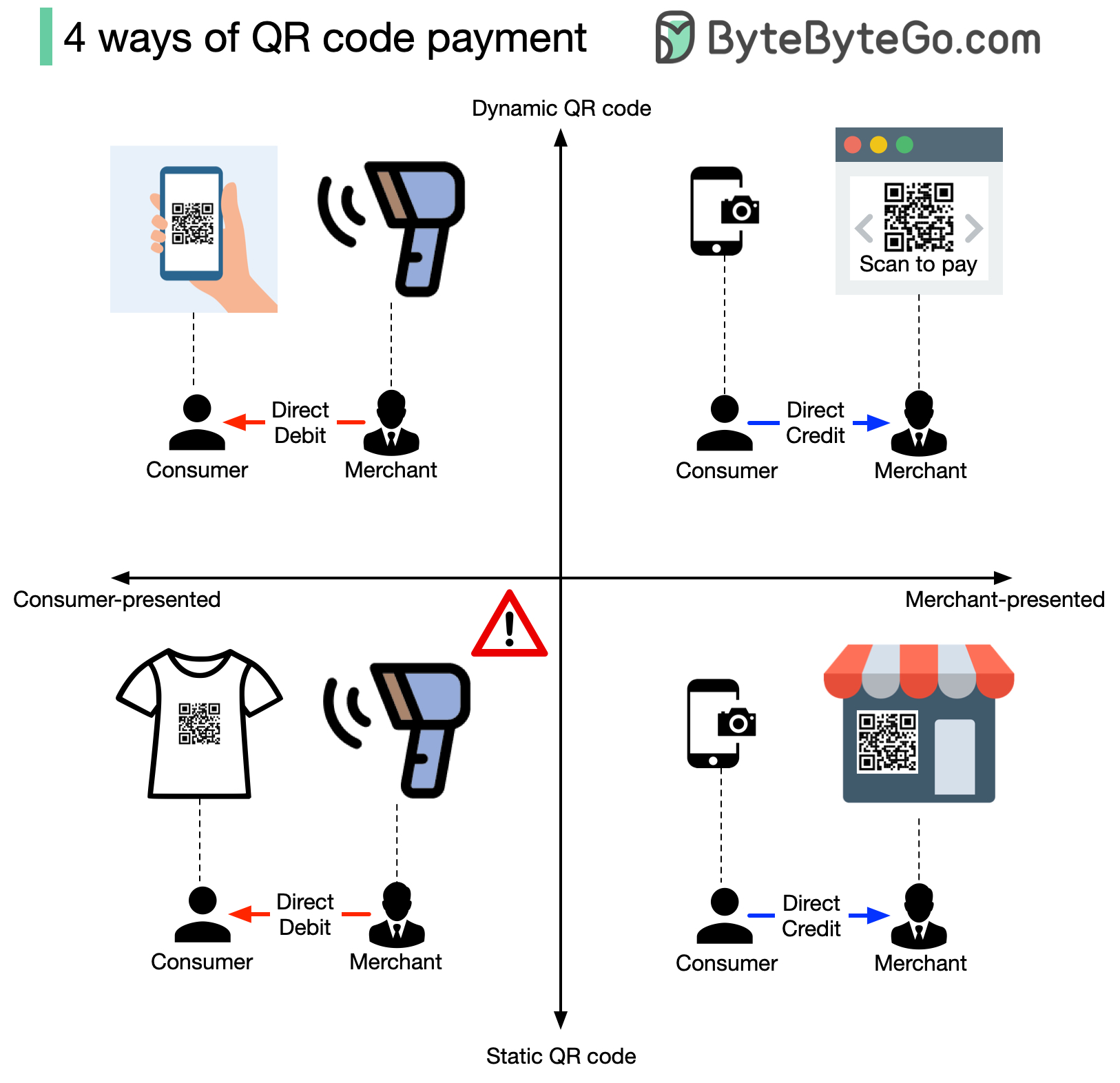
每天,全球有数十亿次交易通过二维码完成。从街边小店到跨国超市,从公交地铁到在线购物,二维码支付已经成为我们生活中不可或缺的一部分。
但你是否知道,看似简单的"扫一扫"背后,其实隐藏着4种完全不同的技术实现方式?这些方式在安全性、用户体验和适用场景上有着显著差异。
今天,我们将通过两个核心问题来深入剖析二维码支付的技术内幕:
1. 谁出示二维码? - 消费者还是商家?
2. 二维码是动态还是静态? - 实时生成还是一次性固定?
通过这篇文章,你将彻底理解二维码支付的技术原理,并能根据实际需求选择最适合的方案。
问题一:谁出示二维码?
二维码支付的第一个关键维度是二维码的出示方,这决定了支付流程的发起者和控制权。
1. 消费者出示模式(Consumer-Presented Mode)
在这种模式下,消费者出示二维码,商家使用扫描设备进行扫描。
支付流程:
消费者打开支付App → 生成付款码 → 商家扫描 → 实时扣款 → 支付完成
真实场景:
- 超市收银台:你出示微信/支付宝付款码
- 公交地铁:出示乘车码
- 便利店:出示会员码
技术实现原理:
// 消费者端:生成支付二维码
class ConsumerQRGenerator {
  constructor(userId, amount, currency) {
    this.userId = userId;
    this.amount = amount;
    this.currency = currency;
    this.timestamp = Date.now();
    this.nonce = this.generateNonce();
  }

  generateQRData() {
    return {
      type: "consumer_presented",
      userId: this.userId,
      amount: this.amount,
      currency: this.currency,
      timestamp: this.timestamp,
      nonce: this.nonce,
      signature: this.generateSignature()
    };
  }

  generateSignature() {
    // 使用私钥对数据进行签名,确保不可篡改
    const data = `${this.userId}${this.amount}${this.timestamp}${this.nonce}`;
    return this.signWithPrivateKey(data);
  }
}
商家扫描端处理:
class MerchantScanner {
  async scanAndProcess(qrData) {
    // 1. 验证二维码签名(防篡改)
    const isValid = await this.verifySignature(qrData);
    if (!isValid) {
      throw new Error("二维码签名验证失败");
    }

    // 2. 检查二维码时效性(通常有效期为1-5分钟)
    if (Date.now() - qrData.timestamp > 300000) {
      throw new Error("二维码已过期");
    }

    // 3. 发起扣款请求
    const paymentResult = await this.requestPayment({
      userId: qrData.userId,
      amount: qrData.amount,
      currency: qrData.currency,
      merchantId: this.merchantId
    });

    return paymentResult;
  }
}
技术特点分析:
| 特性 | 说明 | 技术实现 |
|---|---|---|
| 实时性 | 二维码通常有1-5分钟有效期 | 时间戳 + 过期检查 |
| 网络依赖 | 商家设备必须实时联网 | WebSocket/HTTP长连接 |
| 安全性 | 通过签名机制防止篡改 | 非对称加密 + 数字签名 |
| 用户体验 | 支付速度快(1-2秒) | 优化扫描和验证流程 |
优势:
- ✅ 支付速度快,适合高频小额交易
- ✅ 安全性高,动态生成防复制
- ✅ 用户体验流畅,无需输入金额
挑战:
- ❌ 需要实时联网,离线场景受限
- ❌ 对商家设备有一定要求
- ❌ 二维码过期需要重新生成
2. 商家出示模式(Merchant-Presented Mode)
在这种模式下,商家出示二维码,消费者使用手机扫描进行支付。
支付流程:
商家生成收款码 → 消费者扫描 → 确认支付信息 → 授权扣款 → 支付完成
真实场景:
- 餐厅桌台码:扫码点餐支付
- 零售店铺:固定收款码
- 线上线下融合:线上下单,线下扫码支付
技术实现原理:
// 商家端:生成收款二维码
class MerchantQRGenerator {
  constructor(merchantId, amount, orderId) {
    this.merchantId = merchantId;
    this.amount = amount;
    this.orderId = orderId;
    this.timestamp = Date.now();
    this.qrType = "merchant_presented";
  }

  generateQRData() {
    return {
      type: this.qrType,
      merchantId: this.merchantId,
      amount: this.amount,
      orderId: this.orderId,
      timestamp: this.timestamp,
      // 静态二维码可能不包含金额
      isDynamic: this.amount !== null
    };
  }
}

// 消费者端:扫描并处理
class ConsumerScanner {
  async scanAndPay(qrData) {
    // 1. 解析二维码数据
    const { merchantId, amount, orderId } = qrData;

    // 2. 显示支付确认界面(关键安全步骤)
    const confirmed = await this.showPaymentConfirm({
      merchantId,
      amount,
      orderId
    });

    if (!confirmed) {
      throw new Error("用户取消支付");
    }

    // 3. 用户授权,发起支付
    const paymentResult = await this.authorizePayment({
      merchantId,
      amount,
      orderId,
      consumerId: this.consumerId
    });

    return paymentResult;
  }
}
技术特点分析:
| 特性 | 说明 | 技术实现 |
|---|---|---|
| 用户体验 | 消费者有充分确认时间 | 支付确认界面 |
| 离线支持 | 静态二维码可离线展示 | 本地生成和存储 |
| 授权机制 | 需要消费者明确授权 | 用户交互确认 |
| 灵活性 | 支持复杂业务逻辑 | 订单关联、优惠计算 |
优势:
- ✅ 用户体验友好,有确认环节
- ✅ 支持离线场景(静态码)
- ✅ 可关联复杂订单信息
挑战:
- ❌ 支付速度相对较慢
- ❌ 需要消费者主动操作
- ❌ 对网络有一定依赖
问题二:二维码是动态还是静态?
二维码支付的第二个关键维度是二维码的动态性,这直接影响了二维码的安全性和使用便利性。
1. 动态二维码(Dynamic QR Code)
动态二维码是在每次展示时实时生成的,通常包含丰富的交易信息。
技术实现:
class DynamicQRCode {
  constructor(transactionData) {
    this.data = transactionData;
    this.expiryTime = 300000; // 5分钟有效期
    this.generationTime = Date.now();
  }

  generate() {
    // 包含完整的交易信息
    const qrContent = {
      version: "2.0",
      transaction: {
        id: this.generateTransactionId(),
        type: this.data.type,
        amount: this.data.amount,
        currency: this.data.currency,
        merchant: this.data.merchant,
        consumer: this.data.consumer,
        timestamp: this.generationTime,
        expiry: this.generationTime + this.expiryTime
      },
      security: {
        signature: this.generateSignature(),
        nonce: this.generateNonce(),
        encryption: this.data.encryption || "AES-256-GCM"
      },
      metadata: {
        app: "payment-system",
        version: "1.0",
        device: this.data.deviceId
      }
    };

    return this.encodeToQR(qrContent);
  }

  validate() {
    const now = Date.now();
    if (now > this.data.expiry) {
      return { valid: false, reason: "expired" };
    }

    // 验证签名
    const isValid = this.verifySignature(this.data);
    return { valid: isValid, reason: isValid ? "valid" : "invalid_signature" };
  }
}
动态二维码的特点:
| 特性 | 说明 | 技术实现 |
|---|---|---|
| 时效性 | 通常1-5分钟有效期 | 时间戳 + 过期检查 |
| 信息丰富 | 包含完整交易详情 | JSON结构化数据 |
| 安全性高 | 每次生成唯一签名 | 非对称加密 + 数字签名 |
| 防重放 | 包含随机数(nonce) | 唯一性验证 |
| 可追踪 | 包含完整交易链 | 事务ID + 时间戳 |
安全机制示例:
// 多层安全验证
class DynamicQRSecurity {
  async validateQRCode(qrData) {
    const checks = [
      this.checkExpiry(qrData),
      this.checkSignature(qrData),
      this.checkNonce(qrData), // 防重放攻击
      this.checkTransactionLimits(qrData),
      this.checkBlacklist(qrData)
    ];

    const results = await Promise.all(checks);
    return results.every(r => r.passed);
  }

  checkNonce(qrData) {
    // 检查nonce是否已被使用(防重放)
    const used = this.nonceCache.has(qrData.security.nonce);
    if (!used) {
      this.nonceCache.set(qrData.security.nonce, Date.now());
      // 设置nonce过期时间(如5分钟)
      setTimeout(() => {
        this.nonceCache.delete(qrData.security.nonce);
      }, 300000);
    }
    return { passed: !used, reason: used ? "nonce_reused" : "valid" };
  }
}
2. 静态二维码(Static QR Code)
静态二维码是一次性生成的,通常不包含交易信息或只包含固定信息。
技术实现:
class StaticQRCode {
  constructor(merchantId, fixedData) {
    this.merchantId = merchantId;
    this.fixedData = fixedData;
    this.qrType = "static";
  }

  generate() {
    // 静态二维码通常只包含商户标识
    const qrContent = {
      version: "1.0",
      type: this.qrType,
      merchant: {
        id: this.merchantId,
        name: this.fixedData.merchantName,
        category: this.fixedData.category
      },
      // 不包含具体金额,金额由支付时确定
      payment: {
        method: "dynamic_amount",
        currency: this.fixedData.currency || "CNY"
      },
      // 可能包含固定费率或折扣信息
      rules: this.fixedData.rules || null
    };

    return this.encodeToQR(qrContent);
  }

  // 静态二维码的支付处理
  processPayment(scanData) {
    // 扫描时需要额外输入金额
    const amount = scanData.amount;
    const consumerId = scanData.consumerId;

    return {
      merchantId: this.merchantId,
      amount: amount,
      consumerId: consumerId,
      timestamp: Date.now(),
      // 静态二维码需要额外验证
      requiresVerification: true
    };
  }
}
静态二维码的特点:
| 特性 | 说明 | 技术实现 |
|---|---|---|
| 持久性 | 永久有效,无需更新 | 一次性生成,长期使用 |
| 信息简单 | 通常只包含商户ID | 最小化数据结构 |
| 离线支持 | 无需联网即可展示 | 本地生成和存储 |
| 灵活性 | 支付金额动态确定 | 支付时输入或协商 |
| 成本低 | 无需频繁更新 | 一次生成,多次使用 |
安全考虑:
class StaticQRSecurity {
  constructor() {
    this.merchantWhitelist = new Set();
    this.rateLimiting = new Map();
  }

  validateStaticPayment(scanData) {
    const { merchantId, consumerId, amount } = scanData;

    // 1. 商户白名单验证
    if (!this.merchantWhitelist.has(merchantId)) {
      return { valid: false, reason: "merchantnotwhitelisted" };
    }

    // 2. 金额合理性检查
    if (amount <= 0 || amount > this.getMaxAmount(consumerId)) {
      return { valid: false, reason: "invalid_amount" };
    }

    // 3. 频率限制(防刷)
    const key = `${consumerId}_${merchantId}`;
    const now = Date.now();
    const recent = this.rateLimiting.get(key) || [];

    // 清理过期记录(1小时内)
    const filtered = recent.filter(time => now - time < 3600000);

    if (filtered.length >= 10) { // 限制1小时内最多10次
      return { valid: false, reason: "ratelimitexceeded" };
    }

    filtered.push(now);
    this.rateLimiting.set(key, filtered);

    return { valid: true };
  }
}
四种方式的组合与应用
通过两个维度的组合,我们得到4种二维码支付方式:
1. 消费者出示 + 动态二维码
典型应用: 超市收银、公共交通
const consumerDynamicQR = {
  mode: "consumer_presented",
  qrType: "dynamic",
  security: "high",
  useCase: "快速结账",
  example: "微信支付付款码、支付宝付款码"
};
优势:
- 支付速度快(1-2秒)
- 安全性高(动态生成)
- 适合高频小额支付
挑战:
- 需要实时联网
- 对设备性能要求较高
2. 消费者出示 + 静态二维码
典型应用: 会员卡、固定折扣码
const consumerStaticQR = {
  mode: "consumer_presented",
  qrType: "static",
  security: "中等",
  useCase: "会员识别、固定优惠",
  example: "会员码、固定折扣码"
};
优势:
- 无需联网即可展示
- 适合离线环境
- 便于打印和携带
挑战:
- 安全性相对较低
- 功能相对固定
3. 商家出示 + 动态二维码
典型应用: 餐厅点餐、零售收款
const merchantDynamicQR = {
  mode: "merchant_presented",
  qrType: "dynamic",
  security: "高",
  useCase: "精确收款、订单关联",
  example: "餐厅桌台码、零售订单码"
};
优势:
- 用户体验好(有确认时间)
- 可关联具体订单
- 支持复杂业务逻辑
挑战:
- 需要消费者主动操作
- 对网络有依赖
4. 商家出示 + 静态二维码
典型应用: 小微商户、固定收款
const merchantStaticQR = {
  mode: "merchant_presented",
  qrType: "static",
  security: "中等",
  useCase: "小微商户、固定收款",
  example: "个人收款码、固定店铺码"
};
优势:
- 成本低,易于部署
- 无需复杂设备
- 适合小微商户
挑战:
- 金额需要手动输入
- 安全性依赖额外验证
技术实现对比
安全性对比
| 方式 | 身份验证 | 防篡改 | 防重放 | 时效性 | 综合评分 |
|---|---|---|---|---|---|
| 消费者+动态 | ⭐⭐⭐⭐⭐ | ⭐⭐⭐⭐⭐ | ⭐⭐⭐⭐⭐ | ⭐⭐⭐⭐⭐ | 5.0 |
| 消费者+静态 | ⭐⭐⭐ | ⭐⭐⭐ | ⭐⭐ | ⭐⭐⭐⭐ | 3.5 |
| 商家+动态 | ⭐⭐⭐⭐ | ⭐⭐⭐⭐ | ⭐⭐⭐⭐ | ⭐⭐⭐⭐ | 4.5 |
| 商家+静态 | ⭐⭐⭐ | ⭐⭐⭐ | ⭐⭐ | ⭐⭐⭐⭐ | 3.0 |
性能对比
| 方式 | 生成成本 | 扫描速度 | 网络依赖 | 设备要求 | 适用规模 |
|---|---|---|---|---|---|
| 消费者+动态 | 中 | 快 | 强 | 中 | 大型商户 |
| 消费者+静态 | 低 | 快 | 弱 | 低 | 个人用户 |
| 商家+动态 | 中 | 中 | 强 | 中 | 中型商户 |
| 商家+静态 | 低 | 慢 | 弱 | 低 | 小微商户 |
实际案例分析
案例1:微信支付的实现
// 微信支付付款码(消费者+动态)
class WeChatPaymentCode {
  generate() {
    return {
      type: "consumer_dynamic",
      codeType: "auth_code",
      encryptType: "AES-256",
      // 每分钟更新一次
      refreshInterval: 60000,
      // 包含设备信息和用户标识
      deviceInfo: this.getDeviceInfo(),
      userInfo: this.getUserInfo()
    };
  }
}

// 微信收款码(商家+静态)
class WeChatMerchantQR {
  generate() {
    return {
      type: "merchant_static",
      merchantId: this.merchantId,
      fixedAmount: null, // 金额由支付时确定
      有效期: "永久",
      features: ["固定收款", "支持备注"]
    };
  }
}
案例2:支付宝的实现
// 支付宝付款码(消费者+动态)
class AlipayPaymentCode {
  constructor() {
    this.refreshInterval = 60000; // 1分钟刷新
    this.encryption = "RSA2";
  }

  generate() {
    return {
      code: this.generateAuthCode(),
      timestamp: Date.now(),
      sign: this.signData(),
      // 动态包含交易信息
      transaction: {
        maxAmount: 5000, // 单笔限额
        dailyLimit: 20000 // 日限额
      }
    };
  }
}

// 支付宝收款码(商家+静态)
class AlipayMerchantQR {
  generate() {
    return {
      type: "fixed_qr",
      merchant: this.merchantInfo,
      payment: {
        method: "scan_pay",
        currency: "CNY",
        // 不包含具体金额
        amount: "dynamic"
      },
      features: ["信用卡支持", "花呗分期"]
    };
  }
}
未来发展趋势
1. 技术演进方向
// 下一代二维码支付技术
class NextGenQRPayment {
  constructor() {
    this.technologies = [
      "生物识别集成",
      "区块链技术",
      "AI风控",
      "物联网支付",
      "跨链支付"
    ];
  }

  futureFeatures() {
    return {
      // 无感支付
      frictionless: {
        faceRecognition: true,
        gestureControl: true,
        voiceAuth: true
      },
      // 智能风控
      intelligent: {
        realTimeRiskScoring: true,
        behaviorAnalysis: true,
        fraudDetection: true
      },
      // 跨平台兼容
      interoperability: {
        crossBorder: true,
        crossCurrency: true,
        crossPlatform: true
      }
    };
  }
}
2. 安全性提升
// 增强安全机制
class EnhancedSecurity {
  constructor() {
    this.methods = [
      "量子加密",
      "零知识证明",
      "多方计算",
      "同态加密"
    ];
  }

  implementSecurity() {
    return {
      // 量子安全
      quantumSafe: {
        algorithm: "Lattice-based",
        keySize: 256,
        resistance: "quantum_computing"
      },
      // 隐私保护
      privacy: {
        zeroKnowledge: true,
        dataMinimization: true,
        userConsent: true
      }
    };
  }
}
总结与建议
选择指南
根据业务场景选择:
- 大型零售/超市
- 推荐:消费者出示 + 动态二维码
- 理由:速度快、安全性高、适合高频交易
- 餐饮服务
- 推荐:商家出示 + 动态二维码
- 理由:用户体验好、可关联订单、支持复杂场景
- 小微商户/个人
- 推荐:商家出示 + 静态二维码
- 理由:成本低、易于部署、维护简单
- 会员系统/固定优惠
- 推荐:消费者出示 + 静态二维码
- 理由:离线可用、便于携带、功能固定
技术选型建议
// 技术选型决策树
function selectQRPaymentType(requirements) {
  const { security, speed, cost, offline, complexity } = requirements;

  if (security > 8 && speed > 7) {
    return "consumer_dynamic"; // 消费者+动态
  } else if (security > 7 && offline) {
    return "merchant_dynamic"; // 商家+动态
  } else if (cost < 5 && complexity < 5) {
    return "merchant_static"; // 商家+静态
  } else {
    return "consumer_static"; // 消费者+静态
  }
}
安全最佳实践
- 动态二维码优先:对于涉及资金的交易,优先使用动态二维码
- 多层验证:结合签名、时效性、频率限制等多重验证
- 实时监控:建立实时风控系统,监控异常交易
- 用户教育:提醒用户保护二维码,避免截屏分享
- 定期更新:及时更新加密算法和安全协议
记住:技术的价值在于解决实际问题。理解这4种方式,你就能更好地设计和选择适合自己业务的支付方案。 🚀
评论
发表评论
|
|
|